
Picking a cleaning schedule sounds simple until you try it. Book too often and you pay for visits the house did not really need. Book too far apart and every visit turns into a catch-up job while the bathrooms slide in between. Choosing weekly vs biweekly cleaning, or stretching to monthly, comes down to how your household actually lives day to day.
Most recurring cleaning plans come in those three rhythms, and each one fits a different kind of home. Below, we walk through what each frequency covers, the five things that should drive your choice, and the signs that your current schedule needs a change.
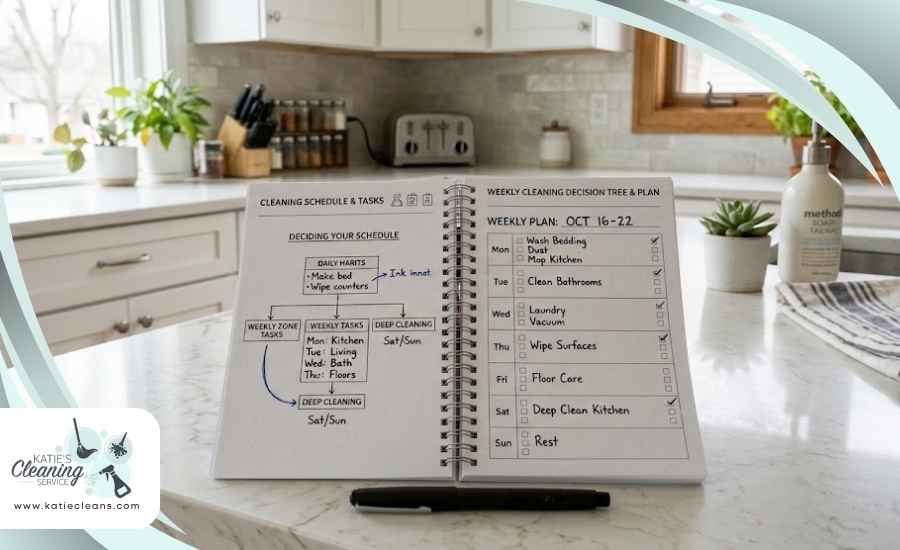
What Each House Cleaning Frequency Really Covers
The visit itself can look similar on paper no matter how often it happens. What changes is how much dirt has built up by the time the team walks in, and how clean the house stays in the days between visits.
Weekly Cleaning
Weekly visits keep the house close to “just cleaned” almost all the time. Kitchen counters, bathroom sinks, and floors never go more than seven days without attention, so grime never gets a chance to settle in. This rhythm suits homes where dirt shows up fast, and nobody has the time or energy to fight it midweek.
Bi-Weekly Cleaning
Every two weeks is the middle ground most households land on. The house gets a full reset twice a month, and a few quick habits in between, such as wiping the kitchen counters and running a vacuum once, keep it from slipping. It works well for busy homes that can handle light upkeep on their own.
Monthly Cleaning
Monthly visits act more like a regular reset than ongoing upkeep. They fit quiet homes where the people living there handle daily tidying and want a professional to catch the dust, soap scum, and floor grime that builds up over a few weeks. Each visit usually has more to tackle because of the longer gap.
Five Factors That Should Set Your Cleaning Schedule
No single rule works for every house, but the same five factors come up in almost every decision. Weigh them together rather than picking a schedule off one factor alone.
Household Size and Cleaning Needs
More people means more dishes, more laundry, more bathroom use, and more dirt carried in from outside. A couple in a three-bedroom home can often stretch to bi-weekly or monthly, while a family of five in the same house will usually feel the difference by the end of the first week.
Pets, Shedding and Cleaning Frequency
Dogs and cats add hair, dander, and tracked-in dirt every single day. The EPA lists pet allergens, dust mites, and pollen among the biological contaminants found in household dust, and notes that people and pets track these pollutants indoors. Homes with heavy shedders, or with anyone who has allergies, tend to do best with weekly or bi-weekly visits.
Foot Traffic, Kids and Everyday Dirt
A home with young kids, a mudroom that sees cleats and boots, or a steady stream of visitors picks up dirt much faster than a quiet one. Entryways, kitchen floors and bathrooms are where you will notice it first. If those spots look rough a few days after a cleaning, the gap between visits is probably too long.
Your Home’s Current Cleaning Condition
A house that has gone months without a thorough clean needs a catch-up visit before any recurring rhythm can hold. Built-up grime on baseboards, tile grout, and appliance fronts takes extra time to remove, which is why many homeowners start with a deep clean and then switch to a regular schedule. Some spots, like grout and the inside of the oven, only need that deeper work every few months, and how often a house needs a deep clean varies from room to room.
What Each Cleaning Visit Should Include
Scope matters as much as frequency. A visit focused on kitchens, bathrooms, and floors is a different job than one that also covers inside the fridge, interior windows, or baseboards in every room. If you want extra tasks rotated in, a more frequent schedule gives the team room to cover them without rushing the basics.

Matching Common Households to a Cleaning Frequency
Real homes rarely fit neatly into one box, but most land close to one of a few common patterns. These are the household types we see most often and the cleaning rhythm that usually fits each one:
- Busy Family With Kids and a Dog: Weekly visits keep up with daily messes, shedding, and heavy bathroom use.
- Working Couple With No Pets: Bi-weekly visits handle the full reset while light midweek tidying covers the rest.
- Household With Allergies: Weekly or bi-weekly visits keep dust and dander from building up between cleanings.
- Retirees or Empty Nesters: Bi-weekly or monthly visits cover the heavier tasks in a quieter home.
- Small Apartment With Light Use: Monthly visits catch the dust and grime that daily habits miss.
Treat these as a starting point, not a final answer. A new puppy, a baby on the way, or a switch to working from home can move a household from one pattern to another overnight.
How Cleaning Frequency Shapes the Cost of Each Visit
House cleaning is usually priced around four things, which are the size of the home, how often visits happen, the condition of the house and the scope of each visit. Frequency affects the others. When visits are closer together, there is less buildup to remove each time, so each visit tends to take less time than one that has to make up for a long gap.
That is why the real comparison is value rather than the number on a single invoice. A monthly visit may cost more per trip than a weekly one because the team has more to do, while weekly visits add up over a month but keep the house consistently clean. When you request quotes, ask how each one accounts for size, frequency, condition, and scope so you are comparing the same work.
Signs Your Current Cleaning Schedule Needs a Change
A schedule that worked last year may not fit how your household lives now. Watch for these signs that it is time to clean more often or space visits further apart:
- Bathrooms and the kitchen look grimy again within a few days of a visit.
- Pet hair collects in corners and under furniture well before the next cleaning.
- Allergy symptoms flare up in the days leading into a scheduled visit.
- Your days off keep getting eaten up by catch-up cleaning.
- The house still looks clean when the team arrives, which can mean visits are closer together than you need.
Any of the first four point toward a shorter gap between visits. The last one is a good sign you could stretch the schedule and put the savings toward a periodic deep clean instead.
Choose the Best Cleaning Frequency for Your Household
The right schedule is the one that keeps your home feeling clean without you thinking about it. Start with who lives there, add pets, traffic, and the home’s current condition, then decide how much each visit should cover. If you are still torn between two options, start with the more frequent one for a month or two and step back once the house is under control.
Katie’s Cleaning Service is a locally owned, family-run house cleaning company based in Manassas, VA, serving homes across Manassas, Centreville, Gainesville, Haymarket, Bristow, and nearby Northern Virginia communities. Owner Katie Stepp and our background-checked, professionally trained teams offer a full range of house cleaning services, from weekly, bi-weekly, and monthly visits to deep cleaning and move-in and move-out cleaning, all scheduled Monday through Friday from 8:30 am to 5:00 pm.

Frequently Asked Questions
Is bi-weekly cleaning enough for a home with pets?
It can be for one low-shedding pet and owners who vacuum between visits. Homes with heavy shedders, several pets, or anyone with allergies usually stay more comfortable on a weekly schedule, since hair and dander build up quickly.
Can I switch from weekly to bi-weekly cleaning later?
In most cases, yes. Many households start weekly to get the house under control and then move to bi-weekly once it stays clean longer. Ask your cleaning company how much notice it needs before a schedule change.
Is weekly cleaning worth it for a small home?
It depends on how the space is used rather than its size. A small home with kids, pets, or a home office can get dirty as fast as a large one, while a lightly used apartment often does fine monthly.
Should I start with a deep clean before recurring visits?
If the home has gone a while without a thorough clean, a deep clean first is usually the better move. It clears built-up grime on baseboards, grout, and appliances so regular visits can focus on keeping things clean.
Do I need to tidy up before the cleaners arrive?
A quick pickup of toys, clothes, and clutter helps the team reach surfaces and floors instead of moving things around. You do not need to clean beforehand, since removing dirt and grime is exactly what the visit is for.

